
Uber Eats: The Complete Guide to Ordering, Delivering, and Partnering in 2026
now
62MB
V1.1.68
100M+
Description
It’s a Friday night, you’re exhausted, and cooking feels like the last thing on earth you want to do. You open your phone, tap a few buttons, and twenty-five minutes later, dinner is at your door. That everyday moment is exactly why the Uber App has become one of the most widely used food delivery apps in the world.
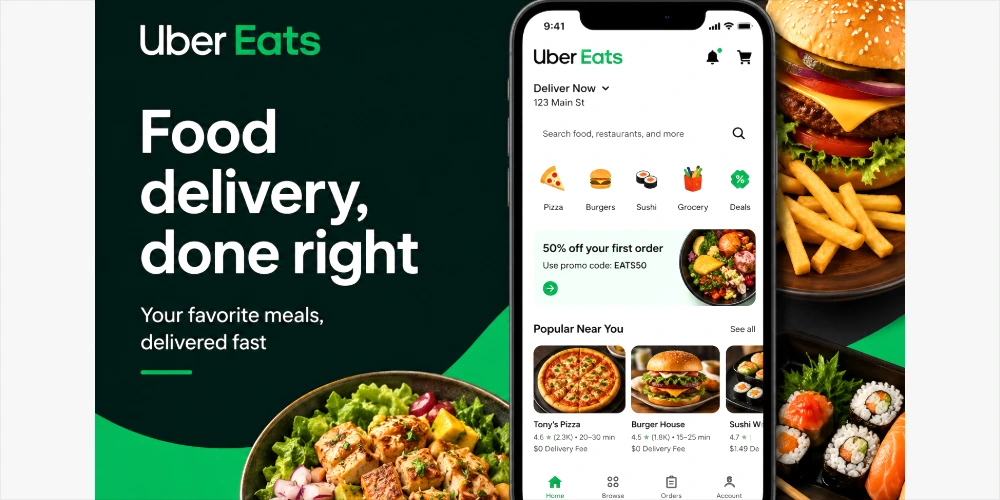
Whether you’re a hungry customer, someone considering becoming a delivery driver, or a restaurant owner weighing your options, Uber Eats touches millions of lives every single day. This guide breaks down everything you need to know about the app in plain, easy-to-understand language — how it works, what it costs, how drivers earn money, and how it stacks up against competitors like DoorDash and Grubhub.
Table of Contents
What Is Uber Eats?
One of the top online meal delivery services in the world, Uber Eats links consumers with eateries, supermarkets, and other companies via an easy-to-use mobile app and website. Uber Technologies launched the service in 2014 to make food ordering simpler, quicker, and more accessible for customers who want meals delivered right to their homes, offices, or other locations.
Uber Eats began as a straightforward restaurant delivery service and has since developed into a full-featured on-demand delivery platform. In many locations across the world, consumers may now purchase anything from fast food and restaurant meals to groceries, convenience store goods, and household necessities. The platform is one of the most well-known brands in the food delivery sector, operating in thousands of cities throughout several nations.
Customers, restaurant partners, and delivery partners are the three main groups that the Uber Eats platform connects. The Uber Eats app allows users to peruse menus, place orders, and monitor deliveries. While delivery partners pick up the items and bring them to clients, restaurant partners receive and prepare orders. Everyone involved has a smooth experience thanks to this technology-driven ecosystem.
A Brief History
The platform began in 2014 as a small feature inside the main app before launching as its own standalone app in 2016. What started as a convenient add-on for a ride-hailing company has since grown into a massive global marketplace, expanding beyond restaurant food into groceries, convenience store items, alcohol, and even household essentials in many cities.
How the Platform Works
At its core, the system operates as a three-sided marketplace connecting three groups:
- Customers who browse restaurants and place orders through the app or website
- Restaurants and merchants, who prepare the food
- Delivery drivers, who pick up the order and bring it to the customer
When an order is placed, the app’s system automatically matches it with a nearby available driver, tracks the order from kitchen to doorstep, and processes payment all within the app.
Key Features
Part of what makes the app so popular is how smooth and predictable the ordering experience feels. Here are the standout features.
- Easy ordering: Browse menus, customize items, and check out in just a few taps
- Real-time tracking: Watch your order move from the restaurant to your door on a live map
- Multiple payment methods: Pay with credit or debit cards, digital wallets, or Uber Cash
- Scheduled deliveries: Place an order in advance for a specific date and time
- Membership benefits: the app One members get reduced or waived Uber Eats delivery fees and other perks on eligible orders
These features work together to make the experience feel less like a transaction and more like a habit, which is a big reason the app has such strong repeat usage.
How to Use?: A Step-by-Step Guide
Getting started with Uber Eats takes only a few minutes. Here’s the process from download to doorstep.
- Download the app: Get the Uber Eats app from the App Store or Google Play, or visit the website.
- Create an account: Sign up with your email or phone number and add a payment method.
- Browse restaurants: Search by cuisine, restaurant name, or dish, and filter by price, rating, or delivery time.
- Place an order: Add items to your cart, customize as needed, choose delivery or pickup, and check out.
- Track your delivery: Follow your order in real time and message your driver directly if needed.
That’s it no phone calls, no guesswork, and a running estimate of exactly when your food will arrive.
For Customers
Benefits
- Access to thousands of local restaurants and national chains in one place
- Live order tracking and direct driver communication
- Group ordering for offices, parties, or family dinners
- Flexible delivery or pickup options
Promotions and Discounts
This app regularly offers promo codes or in-app deals for new and returning customers, including percentage-off discounts, free delivery offers, and bundle deals with select restaurant partners. Deals typically appear directly in the app’s promotions tab or through email offers, so it’s worth checking before every order.
Customer Support Options
If something goes wrong with an order — missing items, a late delivery, or an incorrect charge- its customer support can be reached directly through the app’s Help section, where customers can report an issue, request a refund, or chat with a support agent. Most straightforward issues, like a missing item, are typically resolved within the app in just a few minutes.
For Drivers
How to Become a Driver
Becoming an the App driver is open to almost anyone who meets basic requirements, and unlike Uber’s rideshare service, you don’t necessarily need a car many drivers use bikes, scooters, or e-bikes, especially in dense cities.
Requirements
- Minimum age requirement (typically 18 or older, depending on location)
- A smartphone to run the Uber Eats driver app
- A valid form of identification and, for vehicle drivers, a valid license and registration
- Passing a background check
Earnings Potential
The number of orders a driver completes in an hour, the type of vehicle, the time of day, and the city all have a substantial impact on their compensation. The app drivers report gross earnings in most regions, which vary from $15 to $25 per hour, including base pay, tips, and bonuses. Higher figures are typical in crowded urban areas during peak lunch and dinner rushes, while lower statistics are typical in quieter markets or off-peak hours. Drivers keep 100% of what customers tip, and tips usually account for a significant portion of total revenue.
Keep in mind that these are gross numbers. Since fuel, auto maintenance, and self-employment taxes are deducted from their drivers’ earnings due to their status as independent contractors, many drivers closely monitor their miles and expenses in order to determine their actual take-home pay.
Pros and Cons for Drivers
| Pros | Cons |
| Flexible schedule — work whenever you want | No guaranteed hourly wage in most markets |
| Low barrier to entry (car, bike, or scooter) | Vehicle wear, gas, and maintenance costs |
| Keep 100% of tips | No employee benefits (health insurance, paid leave) |
| Fast weekly payouts | Earnings can be inconsistent day to day |
for Restaurants
Partnering with the App
Restaurants can join the app as delivery partners by signing up through Uber Eats Manager, setting up their digital menu, and choosing a pricing plan that matches their business needs. Once live, the restaurant appears in local search results and can start receiving orders.
Benefits for Restaurant Owners
- Access to a large, ready-made customer base without building an in-house delivery fleet
- Built-in marketing tools, promotions, and sponsored placement options
- Data and analytics on order trends and customer behavior
- Optional access to Uber’s delivery driver network, removing the need to hire couriers directly
Fees and Commissions
Restaurants pay the app a commission (often called a Marketplace Fee) on each order, and the rate depends on the service tier they choose. In general, plans with more marketing support and full-service delivery carry higher commissions, while lighter, self-pickup-focused plans cost less. Many restaurants view this cost as the price of accessing new customers without the overhead of running their own delivery operation.
Uber Eats Pricing and Fees
Understanding the app fees helps customers avoid surprises at checkout. Here’s a breakdown of the most common charges.
| Fee Type | What It Covers | Typical Range |
| Delivery Fee | Cost of getting your order from the restaurant to your door | Varies by distance, demand, and driver availability |
| Service Fee | Helps cover order-related platform costs | Usually, ly a percentage of your order subtotal |
| Small Order Fee | Applied to orders below a restaurant’s minimum subtotal | A flat additional charge on small baskets |
| Uber One Membership | Monthly or annual subscription | $0 delivery fees on eligible orders, plus discounts on qualifying orders and rides |
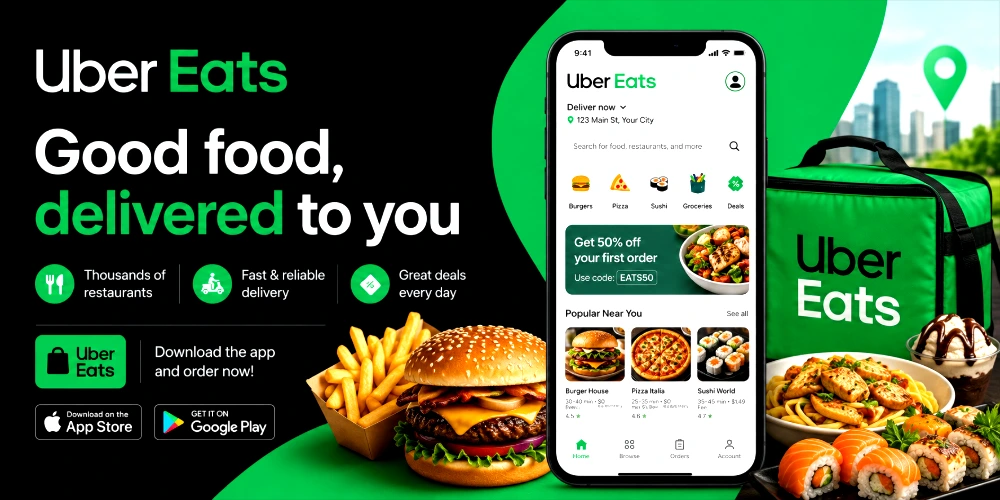
The location, time of day, weather, and driver demand can all affect fees. One of the easiest methods to completely avoid the delivery fee is to select pickup rather than delivery, and an Uber For those who place regular orders, a single membership can cover shipping expenses.
Pros and Cons
| Pros | Cons |
| Huge selection of restaurants and stores | Fees can add up on smaller orders |
| Real-time order tracking | Delivery times can vary during peak hours or bad weather |
| Convenient scheduled ordering | Restaurant pricing on the app is sometimes higher than in-store |
| Uber One membership adds ongoing value for frequent users | Commission costs can be a burden for smaller restaurants |
Competitors
This isn’t the only food delivery app on the market. Here’s how it generally compares to DoorDash, Grubhub, and Deliveroo.
| Platform | Key Strength | Pricing Style | Availability |
| Uber Eats | Broad restaurant selection; integrates with Uber rides | Delivery, service, and small order fees; Uber One membership | Wide availability across many countries |
| DoorDash | Largest US market share and order volume | Similar tiered fee structure; DashPass membership | Strong presence in the US, Canada, and Australia |
| Grubhub | Long-standing presence in major US cities | Delivery and service fees; Grubhub+ membership | Primarily US-focused |
| Deliveroo | Strong restaurant partnerships in Europe | Delivery fees vary by market; Deliveroo Plus membership | Focused on the UK, Europe, and parts of Asia |
The best choice usually comes down to which app has the strongest restaurant selection and most competitive pricing in your specific city, since availability and fees can vary block by block.
Safety and Security
- Payment protection: Payment details are processed securely within the app, so you never need to hand over card information to a driver or restaurant
- Order tracking: Every order includes live GPS tracking, so you always know where your food is
- Customer privacy: it uses masked phone numbers and in-app messaging, so customers and drivers don’t need to share personal contact details
These safeguards are a big part of why so many people feel comfortable ordering food, tipping, and paying entirely through their phone.
Is Uber Eats free to use?
Yes, downloading and creating an account on Uber Eats is completely free. You only pay for the food you order plus any applicable delivery, service, or small order fees — unless you’re an App One member with fee waivers on eligible orders.
How much do Uber Eats drivers earn?
When base pay, tips, and incentives are taken into account, most drivers report gross earnings between $15 and $25 per hour, with tips frequently accounting for a sizable portion of overall revenue. However, earnings vary greatly depending on the city, type of vehicle, and number of hours worked.
Can I schedule deliveries in advance?
Yes. The app lets you place an order ahead of time and choose a specific delivery window, which is useful for planning meals around meetings, events, or busy evenings.
How do refunds work?
If an order arrives incomplete, incorrect, or significantly late, customers can report the issue through the Help section of the app. Uber Eats reviews the report and, when appropriate, issues a refund or account credit
Is Uber One worth it?
For frequent users, the app One can pay for itself quickly since it removes delivery fees on eligible orders and adds discounts on eligible orders and Uber rides. Occasional users may find the free version of the app more cost-effective.
What is the Uber Eats service fee?
The service fee is a charge that helps cover platform and order-related costs. It’s generally calculated as a percentage of your order subtotal and is displayed clearly at checkout before you confirm your order.
Do I need a car to be an Uber Eats driver?
No. Depending on your city, you can deliver using a car, bike, scooter, or e-bike, which makes the driver side of Uber Eats accessible to people without a vehicle.
How does Uber Eats handle payment?
All payments are processed securely within the app using saved cards, digital wallets, or Uber Cash. Customers never need to hand cash or card details directly to a driver.
Can restaurants set their own menu prices on Uber Eats?
Yes, restaurants control their own menu pricing, though some choose to price items slightly higher on delivery apps to help offset commission fees.
How do I contact Uber Eats customer support?
You can reach Uber Eats customer support directly through the Help section in the app, where you can report order issues, request refunds, or chat with a live support agent.
Is there a minimum order amount on Uber Eats?
Some restaurants set a minimum subtotal for delivery orders. Orders below that threshold may include a small order fee to help cover the cost of fulfilling smaller baskets.
Conclusion
Uber Eats has reshaped how millions of people think about mealtime, turning food delivery into a fast, trackable, and remarkably simple experience. For customers, it means restaurant-quality meals delivered to the door with just a few taps. For drivers, it offers a flexible way to earn money on a schedule that fits their lives. And for restaurants, it opens the door to new customers without the cost of building an in-house delivery team.
Whether you’re ordering dinner after a long day, considering a side gig as a delivery driver, or exploring new ways to grow your restaurant, Uber App offers a practical, well-established platform worth understanding. If you haven’t tried it yet, downloading the app is a simple first step toward faster, easier meals — and if you’re already a user, exploring the app or checking for the latest promo codes could help you get even more value out of every order.