Latest AI Image Generators 2026: 9 Best Tools to Try
now
6.25MB
V1.1.71
50K+
Description
The visual landscape of the internet has undergone a monumental shift. Text-to-image generation is no longer an experimental novelty; it is a core operational layer for content creators, digital marketers, graphic designers, and businesses worldwide. Modern generative models produce photorealistic portraits, intricate vector graphics, accurate typography, and complex multi-subject compositions from plain natural-language prompts.
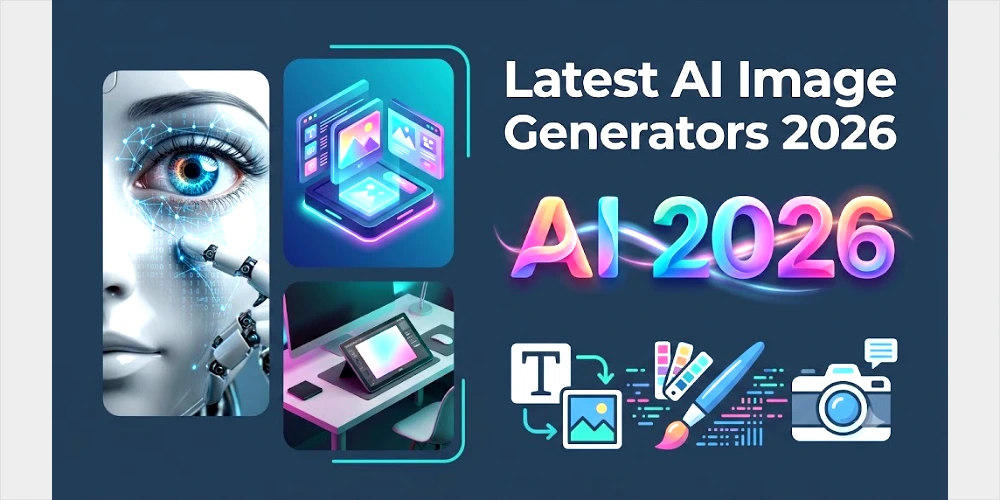
Beyond simple creation, today’s latest AI image generators integrate direct image editing, style transfer, localized inpainting, real-time feedback loops, and design-oriented vector workflows. However, as the ecosystem grows, selecting the right tool becomes challenging. Capabilities, licensing terms, and access methods vary widely across models.
This guide evaluates nine prominent AI image generators available in 2026. We examine their strengths, weaknesses, text rendering, photorealism, and ideal use cases to help you choose the best tool for your workflow.
What Are AI Image Generators?
An AI image generator is a software tool powered by deep learning models—primarily diffusion architectures, transformer-based models, or hybrid visual architectures—that turns textual instructions into visual media.
When you enter a prompt such as “A high-resolution macro shot of a dewdrop reflecting a pine forest at sunrise,” the underlying model processes the natural language through a text encoder, mapping words to visual concepts learned from vast datasets of paired images and captions. The generator then constructs the final image through an iterative denoising or generative process, structuring pixels to align with the prompt’s intent.
Modern platforms extend far beyond basic text-to-image generation:
- Image-to-Image & Inpainting: Modifying existing images by altering isolated regions using targeted text prompts.
- Outpainting (Canvas Expansion): Extending the borders of an image seamlessly while maintaining context.
- Control Nets & Structural Guidance: Using pose maps, depth maps, or line art to dictate exact subject placement and spatial composition.
- Precise Typography Generation: Rendering crisp, legible text directly onto graphic designs, logos, and promotional assets.
How We Selected These AI Image Generators
To provide an objective overview, we evaluated these platforms across key performance metrics:
- Prompt Adherence: How accurately the model interprets nuanced instructions, complex multi-subject layouts, and spatial relationships.
- Photorealism & Texture Detail: The fidelity of skin tones, lighting physics, shadows, background depth, and fine anatomical details.
- Typography & Text Rendering: The tool’s ability to output correct, legible spelling inside generated graphics.
- Editing & Control: Features allowing granular adjustments, such as localized inpainting, subject consistency, and canvas extensions.
- Usability & Workflow Integration: Interface responsiveness, generation speed, API access, and user accessibility.
- Commercial Licensing & Accessibility: Availability of clear commercial rights, free tiers, and predictable pricing structures.
Quick Comparison of the Latest AI Image Generators
| Tool | Best For | Image Quality | Editing Features | Text Rendering | Beginner Friendly | Free Access Tier |
| Meta Muse Image | Social Media & Creative Styling | Very Good | Good | Moderate | Yes | Free / Ecosystem-based |
| GPT Image 2026 | Multimodal Prompting & Workflows | Excellent | Very Good | Excellent | Very High | Plan Dependent |
| FLUX.2 AI | Photorealism & Developer Control | Exceptional | Excellent | Very Good | Moderate | Open/Freemium Providers |
| Ideogram 4 | Graphic Design & Typography | Very Good | Good | Exceptional | High | Limited Free Tier |
| Seedream AI | Multi-Image Workflows & Consistency | Very Good | Excellent | Good | Moderate | Freemium / Credits |
| Grok Imagine | Fast Generation & Social Content | Good | Limited | Moderate | Very High | Tiered Subscriber Access |
| Krea AI | Real-Time Rendering & Upscaling | Excellent | Exceptional | Good | Moderate | Freemium / Daily Limits |
| Recraft AI | SVG Vector Design & Brand Assets | Excellent | Excellent | Very Good | High | Freemium / Paid Plans |
| Nano Banana AI | Fast Edits & Character Continuity | Good | Very Good | Moderate | High | Freemium / Web App |
1. Meta Muse Image
What Is Meta Muse Image?
Meta Muse Image is Meta’s flagship visual creation engine, designed for broad social integration and accessible creative generation. Built to handle natural language prompts natively across mobile and desktop environments, it targets social media creators, casual editors, and digital marketers seeking quick visual iteration.
Key Features
- Social Ecosystem Integration: Directly accessible across meta platforms for messaging, posts, and story creation.
- Rapid Style Transfer: Transforms uploaded photography into illustrative, 3D render, or surreal artistic styles.
- Conversational Editing: Allows iterative refinement via simple conversational prompts.
- Mobile Optimization: Light, responsive user interface designed for quick turnarounds on mobile devices.
Best Uses
- Quick visual ideation for Instagram, Facebook, and WhatsApp marketing campaigns.
- Personal creative experimentation and dynamic profile avatars.
- High-volume, conversational image variations for lifestyle bloggers.
Pros and Cons
- Pros: Highly accessible interface; zero setup overhead; fast generation speed for standard resolution images.
- Cons: Less granular manual control over precise camera angles; commercial rights may vary depending on distribution channel and platform terms.
Who Should Use Meta Muse Image?
Ideal for casual creators, social media managers, and digital marketers needing fast, vibrant visual content optimized for social platforms without managing complex prompt settings.
2. GPT Image 2026
What Is GPT Image 2026?
GPT Image 2026 represents OpenAI’s integrated visual generation framework. Embedded directly within the conversational interface of GPT models, this architecture processes complex visual directives alongside contextual text, logical instructions, and code execution.
Key Features
- Deep Contextual Understanding: Excels at parsing multi-paragraph descriptions, complex spatial layouts, and abstract concepts.
- Conversational Inpainting: Select specific visual regions and request modifications using plain descriptive language.
- Iterative Character Consistency: Maintains core visual characteristics across multiple generation cycles within a single chat session.
- Built-in Typography Handling: Renders multi-word signage, book covers, and poster text accurately within the composition.
Best Uses
- Illustrating long-form blog posts and instructional guides directly from draft text.
- Generating educational diagrams, storyboards, and conceptual product mockups.
- Multi-step graphic design projects requiring continuous text-and-image refinements.
Pros and Cons
- Pros: Unmatched natural language comprehension; seamless integration of image creation and copywriting.
- Cons: Strict safety guardrails can sometimes trigger false-positive generation refusals; fine-grained manual canvas controls are limited compared to specialized node-based software.
Who Should Use GPT Image 2026?
Content creators, analysts, advertisers, and general business professionals, who prioritize adaptable, conversational prompts and integrated text-image workflows over laborious pixel editing,
3. FLUX.2 AI
What Is FLUX.2 AI?
Developed by Black Forest Labs, FLUX.2 AI is an advanced model family designed for high-fidelity photorealism, strict prompt adherence, and architectural versatility. Available through web interfaces, specialized cloud APIs, and open-weight community deployments, FLUX.2 sets a major standard for realistic texture rendering and lighting mechanics.
Key Features
- Photorealistic Fidelity: Exceptional handling of skin textures, human hands, reflective surfaces, and atmospheric lighting.
- Flexible Architecture: Offers varying model sizes tailored for enterprise API endpoints, high-end workstations, or lightweight web interfaces.
- High Prompt Adherence: Accurately renders complex scenes involving multiple characters, specific camera lenses, and exact spatial arrangements.
- Third-Party Integration: Broadly supported across popular AI creation interfaces, node workflows (like ComfyUI), and commercial API pipelines.
Best Uses
- High-end commercial photography mockups, editorial fashion concepts, and product staging.
- Architectural renderings and cinematic concept art requiring precise depth of field.
- Technical workflows requiring open model weights or custom fine-tuning.
Pros and Cons
- Pros: Industry-leading photographic realism; excellent visual structure without artificial “smoothing” artifacts.
- Cons: Full open-weights deployment requires substantial computational GPU resources; official web-hosted interfaces depend on tiered API pricing.
Who Should Use FLUX.2 AI?
Professional designers, technical creators, developers, and photographers, who require raw visual fidelity, photorealistic depth, and control over model deployment,
4. Ideogram 4
What Is Ideogram 4?
Ideogram 4 is an AI image generation platform built specifically to resolve typography and graphic layout challenges. While early text-to-image engines struggled to render legible words, Ideogram 4 treats typography as a core structural element alongside visual imagery.
Key Features
- Typography Engine: Accurately generates legibly styled fonts, stylized text logos, and complex lettering within a single render pass.
- Design & Layout Awareness: Organizes visual elements according to graphic design conventions (e.g., margins, poster layouts, grid alignment).
- Magic Prompt Expansion: Automatically converts short, simple prompts into detailed, aesthetically structured instructions.
- Color Palette Control: Allows users to enforce exact brand color palettes across generated designs.
Best Uses
- Designing event posters, t-shirt prints, stickers, and merchandise artwork.
- Constructing social media promotional banners containing clear discount codes or campaign slogans.
- Creating initial logo concepts and visual identity drafts containing brand names.
Pros and Cons
- Pros: Exceptional text rendering accuracy inside images; excellent layout design sense.
- Cons: Less focused on photorealistic skin details compared to dedicated photography models.
Who Should Use Ideogram 4?
Graphic designers, apparel creators, small business owners, and social media managers who routinely create marketing assets that merge imagery with clear text.
5. Seedream AI
What Is Seedream AI?
Seedream AI is an emerging visual generator optimized for multi-frame continuity, storyboarding, and character preservation across variable visual environments. It addresses a persistent challenge in generative media: keeping a subject identical across multiple distinct scenes.
Key Features
- Character Consistency Engine: Maps subject features to maintain identity across changing environments and camera perspectives.
- Multi-Image Canvas Workflows: Generates sequential panels, visual storyboards, or comic strips with unified art styles.
- High-Resolution Upscaling: Native post-processing options to refine fine lines and structural clarity without altering composition.
- Style Anchor References: Upload reference images to enforce strict visual continuity across an entire project.
Best Uses
- Storyboarding for video production, animation shorts, and YouTube pre-visualization.
- Graphic novel illustrations, children’s books, and character design sheets.
- Consistent visual branding across long-term marketing campaigns.
Pros and Cons
- Pros: Powerful character and style retention capabilities; intuitive multi-frame project setup.
- Cons: Requires clear reference images for best subject-locking performance; rendering times increase during multi-frame generation.
Who Should Use Seedream AI?
Storytellers, comic artists, video creators, and brand strategists who need character and visual consistency across multiple images.
6. Grok Imagine
What Is Grok Imagine?
Grok Imagine is the visual creation component embedded within xAI’s Grok platform. Built for rapid deployment within social streams and conversational threads, it prioritizes speed, stylized rendering, and high-response interaction.
Key Features
- Rapid Render Pipeline: Generates candidate images in seconds, catering to fast-paced real-time visual discussions.
- Direct Social Workflow: Native integration within xAI and X (formerly Twitter) environments for instant publishing and feedback.
- Stylized Visual Flexibility: Capable of outputting digital art, meme formats, realistic concepts, and illustrative designs with brief prompts.
- Lightweight Prompting: Interprets short, colloquial prompts efficiently without requiring lengthy technical descriptions.
Best Uses
- Creating immediate visual reactions, illustrative commentary, and trending social posts.
- Brainstorming quick conceptual artwork during live digital discussions.
- Casual image creation on mobile devices.
Pros and Cons
- Pros: Fast generation speed; convenient integration for active platform subscribers.
- Cons: Features fewer granular image-editing tools; fine canvas and region control are limited.
Who Should Use Grok Imagine?
Active social media users, casual creators, and community managers who value generation speed and seamless platform publishing over complex editing tools.
7. Krea AI
What Is Krea AI?
Krea AI is a real-time creative suite designed for digital artists, designers, and concept directors. Rather than relying solely on static text prompts, Krea provides an interactive canvas where real-time user inputs—such as simple mouse sketches or repositioned shape vectors—instantly transform into detailed AI-generated scenes.
Key Features
- Real-Time Generation Canvas: Updates the output image instantaneously as you move shapes, draw lines, or alter prompts on screen.
- AI Upscaling & Enhancer: Refines low-resolution or soft images, recovering fine texture details, crisp edges, and anatomical definition.
- Pattern & Illusion Generators: Creates subtle visual patterns, hidden typography, and logo-integrated landscapes.
- Screen Tracking Input: Uses active desktop apps or 3D viewports as live reference feeds for AI scene generation.
Best Uses
- Rapid concept sketching for game design, digital environments, and film pre-visualization.
- Enhancing and restoring low-resolution photography or legacy digital artwork.
- Interactive live visual performances and real-time design presentations.
Pros and Cons
- Pros: Immediate visual feedback speeds up spatial composition; outstanding upscaling and enhancement tools.
- Cons: Web-based real-time canvas requires a stable, high-bandwidth internet connection; premium features depend on subscription tiers.
Who Should Use Krea AI?
Concept artists, 3D designers, illustrators, and agency creatives who want interactive visual control rather than waiting for traditional text-prompt generation queues.
8. Recraft AI
What Is Recraft AI?
Recraft AI is a vector and raster design platform tailored specifically for professional graphic designers, branding agencies, and UI/UX teams. Unlike traditional diffusion tools that output standard PNG pixels, Recraft generates native SVG vector files, clean iconography, and brand-consistent design components.
Key Features
- Native SVG Vector Generation: Generates scalable vector graphics that can be edited inside vector software like Sigma or Adobe Illustrator.
- Brand Style Enforcement: Set custom brand palettes, stroke widths, and visual guidelines to ensure all generated assets match brand identity.
- Integrated Canvas Controls: Offers vector editing tools, background erasers, clean imprinting, and palette replacement directly on a unified canvas.
- Consistent Asset Packs: Generates complete sets of matching icons, spot illustrations, and UI elements in a single batch.
Best Uses
- Vector iconography, flat illustrations, and UI graphics for mobile apps and websites.
- Brand identity assets, logos, and print-ready graphic materials requiring scalable SVG formats.
- Generating cohesive graphic design elements without manual vector tracing.
Pros and Cons
- Pros: Exports true vector files (SVG); exceptional control over visual style consistency and brand color palettes.
- Cons: Less suited for complex, cinematic, photorealistic landscapes where raster diffusion tools excel.
Who Should Use Recraft AI?
UI/UX designers, brand managers, graphic illustrators, and digital agencies requiring clean SVG exports and strict style consistency for commercial applications.
9. Nano Banana AI
What Is Nano Banana AI?
Nano Banana AI is a lightweight visual processing model designed for fast, targeted image transformations and precise character modification. Rather than focusing on heavy text-to-scene creation, it concentrates on fast image-to-image editing, localized object replacement, and character continuity.
Key Features
- Focused Image-to-Image Refinement: Rapidly edits existing uploaded photography while preserving overall scene structure.
- Subject Replacement: Swaps clothing, backgrounds, or hand-held objects using targeted selection prompts.
- Low-Resource Footprint: Designed for fast response times on mobile devices and browser applications.
- Consistent Asset Editing: Applies uniform style modifications across batches of product images or social posts.
Best Uses
- E-commerce product visual tweaks (e.g., changing product colors or background settings).
- Fast personal photo editing and portrait adjustments without manual Photoshop layers.
- Preparing quick variations of visual assets for A/B testing in ad campaigns.
Pros and Cons
- Pros: Rapid processing speed for simple edit tasks; easy-to-use interface for beginners.
- Cons: Advanced canvas tools and deep typography management are limited compared to broader creative platforms.
Who Should Use Nano Banana AI?
Small business owners, e-commerce sellers, and social media managers need fast, direct image edits and product variations without steep learning curves.
Which AI Image Generator Is Best?
Because individual creative workflows vary, no single tool serves as a universal solution. The optimal selection depends on your specific production requirements:
Best for Photorealistic Images
- FLUX.2 AI: Leads the industry in anatomical accuracy, skin textures, natural lighting, and architectural camera depth.
Best for Graphic Design & Vector Assets
- Recraft AI: The primary choice for designers requiring clean SVG vectors, brand-matched iconography, and scalable UI elements.
Best for Text & Typography in Images
- Ideogram 4: Unrivaled accuracy for rendering clear text inside posters, apparel designs, logos, and promotional graphics.
Best for Real-Time Canvas Editing
- Krea AI: Offers instant feedback as you sketch or arrange objects on an interactive canvas, supported by strong upscaling tools.
Best for Content Creators & Marketers
- GPT Image 2026: Combines text copywriting, image generation, and conversational editing within a single seamless workflow.
Best for Character & Sequential Consistency
- Seedream AI: Designed specifically for storyboarding, comics, and multi-frame consistency across changing environments.
AI Image Generators for YouTube Creators
Eye-catching visuals directly influence click-through rates (CTR) on platforms like YouTube. Video creators use visual AI engines to streamline production workflows and pre-visualization.
- Thumbnail Composition: Craft bold compositions with expressive lighting, crisp subjects, and dynamic backgrounds.
- Production Backgrounds: Generate ambient wallpaper visuals or virtual studio sets for green-screen compositing.
- Video Pre-Visualization: Create rough storyboards and mood boards before filming complex video sequences.
AI Image Generators for Social Media
Social channels demand a continuous output of fresh visual content. AI tools help social media teams maintain posting schedules across multiple platform aspect ratios:
- Instagram & Threads (1:1 & 4:5): Vibrant lifestyle imagery, artistic renders, and inspirational visual cards.
- TikTok & Reels (9:16): Vertical background artwork, story backgrounds, and promotional announcements.
- Pinterest (2:3): Vertical graphics, info graphic headers, and step-by-step visual cover cards.
- LinkedIn (1.91:1): Professional info graphics, clean data-visual concepts, and corporate presentation graphics.
Batch-producing templates using a style preset allows small social teams to maintain visual brand consistency across channels.
AI Image Generators for Businesses
Modern businesses integrate generative visual workflows across marketing, sales, and internal communications:
- Product Packaging & Concept Staging: Mock up physical product packaging in various real-world environments before manufacturing.
- Ad Campaign Testing: Produce multiple creative variations for Facebook, Instagram, and Google Display campaigns to A/B test audience engagement.
- Corporate Presentations: Replace generic presentation slides with tailored diagrams, conceptual imagery, and branded graphic layouts.
Free vs. Paid latestAI Image Generators
Most platforms follow a premium or credit-based subscription model.
What Free Plans Usually Offer
Free plans provide a practical way to evaluate a platform’s prompt response and image quality:
- Limited daily or monthly generation credits.
- Standard-priority generation queues during peak traffic hours.
- Watermarked images or standard resolution limits (e.g., 1024×1024).
- Public generation galleries where created assets are visible to other users.
What Paid Plans Usually Add
Upgrading to a paid tier removes production bottlenecks for professional workflows:
- Fast-track priority generation queues.
- Full commercial use licenses and intellectual property usage terms.
- Access to advanced editing models, high-resolution upscaling, and SVG vector exports.
- Private generation options that hide your assets from public search indexes.
Are AI-Generated Images Copyrighted?
Legal frameworks surrounding synthetic media continue to evolve globally. Key principles to keep in mind include:
- Human Authorship Requirements: In many jurisdictions (including the United States), purely AI-generated artwork created without substantial human creative input may not qualify for traditional copyright registration.
- Human Creative Contribution: Incorporating significant manual post-processing, complex vector compositing, structural editing, or custom hand-drawn elements can establish eligible copyright protection over the final composite work.
- Platform Terms of Service: Commercial usage rights are dictated by your agreement with the software provider. Free plan tiers often restrict commercial deployment, whereas paid plans typically grant full commercial rights.
- Third-Party Rights & Trademarks: Avoid generating images containing recognizable brand logos, protected trademarked symbols, or copyrighted fictional characters to prevent intellectual property disputes.
- Style & Medium: Visual aesthetic (e.g., photorealistic editorial shot, 3D isometric render, minimalist vector illustration).
- Aspect Ratio: Format parameters (e.g., 16:9 or selecting native canvas dimensions).
Common Problems With the Latest AI Image Generators
While visual AI tools have advanced significantly, specific visual artifacts remain common across models:
- Anatomical Distortions: Extra fingers, intertwined limbs, or asymmetrical eyes can appear in complex multi-person scenes.
Fix: Use localized in painting to re-render problematic hands or facial features, or apply negative prompt terms like extra fingers, distorted hands where supported.
- Text Spelling Errors: Scrambled characters or duplicate letters inside banners.
Fix: Switch to specialized typography models like Ideogram 4, or generate background art and add text overlays manually in graphic design software.
- Inconsistent Characters: Subjects changing facial structure, age, or clothing across sequential images.
Fix: Utilize character-locking features in tools like Seedream AI, or use visual reference anchors during image-to-image generation.
- Over-Saturated “AI Gloss” Look: Unnaturally smooth surfaces and hyper-vibrant colors that make images look artificial.
Fix: Include prompt descriptors like natural film grain, soft muted tones, editorial photography, 35mm film texture to reduce plastic-looking smooth textures.
Latest AI Image Generators vs. Traditional Design Software
AI generators complement—rather than completely replace—established design platforms like Adobe Photoshop, Illustrator, and Figma.
| Feature / Capability | AI Image Generators | Traditional Design Software |
| Creation Speed | Instant (Seconds/Minutes) | Manual (Hours/Days) |
| Ideation & Concepts | Exceptional flexibility | Requires manual drafting |
| Pixel-Level Control | Moderate to High (via Inpainting) | Complete, pixel-perfect precision |
| Vector Manipulation | Limited (Except Recraft AI) | Native node and path editing |
| Learning Curve | Low (Natural language prompts) | Moderate to High (Tool mastery required) |
| Workflow Role | Idea generation, asset creation | Final compositing, layout, typography fine-tuning |
Use AI art generators to create core visual elements, background scenes, and textures, and then import those assets into traditional vector or design software for final layout grid alignment, precise typography placement, and prepress adjustments.
Safety and Responsible Use of AI Image Generators
Deploying synthetic media responsibility maintains digital trust and protects brands from ethical and legal issues:
- Prevent Deceptive Visuals: Avoid publishing synthetic images that mimic real-world breaking news events, public disasters, or political figures in misleading contexts.
- Respect Likeness & Privacy: Do not generate realistic depictions of private individuals without explicit consent.
- Verify Commercial Permissions: Confirm that your subscription tier includes full commercial usage rights before incorporating generated visual assets into commercial client deliverables, advertisements, or products.
- Protect Confidential Data: Refrain from uploading proprietary corporate documents, unreleased product blueprints, or private customer records as reference images on public AI platforms.
Frequently Asked Questions
What are the latest AI image generators in 2026?
The latest platforms include Meta Muse Image, GPT Image 2026, FLUX.2 AI, Ideogram 4, Seedream AI, Grok Imagine, Krea AI, Recraft AI, and Nano Banana AI. Each tool caters to specific visual tasks ranging from photorealism to vector design.
What is the best AI image generator?
There is no single best tool for every workflow. FLUX.2 AI leads in photorealism, Ideogram 4 excels at rendering text, Recraft AI is best for scalable SVG vectors, and GPT Image 2026 provides the best conversational workflow.
Which AI image generator is best for realistic images?
FLUX.2 AI is widely recognized for generating photorealistic skin textures, accurate anatomical details, realistic reflections, and natural camera lighting physics.
Which AI tool is best for text in images?
Ideogram 4 specializes in typography, rendering clean, legible words, brand names, and complex lettering directly inside graphic designs and posters.
Which AI image generator is best for designers?
Recraft AI is ideal for graphic and UI designers because it generates native, editable SVG vector files, icon sets, and brand-consistent design elements.
Which AI image generator is best for bloggers?
GPT Image 2026 and Meta Muse Image offer fast workflows for bloggers seeking custom featured article graphics, section illustrations, and social sharing cards.
Are AI image generators free?
Most platforms offer limited free tiers or daily trial credits. However, high-volume rendering, fast priority queues, high-resolution upscaling, and full commercial usage rights typically require a paid subscription.
Can AI-generated images be used commercially?
Yes, provided you comply with the platform’s specific Terms of Service. Most paid plan tiers grant commercial usage rights, but you must avoid infringing on third-party trademarks, logos, or copyrighted characters.
What is FLUX.2 AI?
FLUX.2 AI is an advanced model family developed by Black Forest Labs, optimized for photorealism, high prompt adherence, and architectural flexibility across cloud APIs and open model environments.
What is Ideogram 4?
Ideogram 4 is a visual creation platform engineered specifically to solve typography challenges, producing clear, correctly spelled text inside logos, apparel prints, and marketing graphics.
What is Krea AI?
Krea AI is a real-time creative platform featuring an interactive canvas where sketches, vectors, and live inputs instantly transform into detailed imagery, supported by powerful upscaling engines.
What is Nano Banana AI?
Nano Banana AI is a lightweight processing tool focused on fast image-to-image editing, localized object replacement, and character adjustments on mobile and web interfaces.
Final Verdict
The generative AI landscape of 2026 offers specialized tools tailored to distinct creative needs:
- For Photorealism & High-End Photography: Choose FLUX.2 AI.
- For Vector Graphics & UI Assets: Choose Recraft AI.
- For Typography & Poster Design: Choose Ideogram 4.
- For Real-Time Canvas Experimentation: Choose Krea AI.
- For Storyboarding & Character Consistency: Choose Seedream AI.
- For All-in-One Conversational Writing & Visuals: Choose GPT’s latest AI image generators 2026.
- For Social Media Content & Quick Edits: Choose Meta Muse Image, Grok Imagine, or Nano Banana AI.
Selecting the right tool comes down to your budget, technical setup, and output requirements. Test free tiers across a few platforms to determine which tool integrates best into your creative workflow.