
Loora AI Review 2026: Best AI Tool for English Language Practice
now
94MB
V1.1.71
10M+
Description
Finding someone to practice spoken English with is hard. Human tutors are expensive, language partners are unreliable, and most classroom settings don’t leave much room for one-on-one conversation. This gap is exactly what a new wave of AI English-learning tools is trying to close, and Loora AI is one of the more talked-about names in that space.
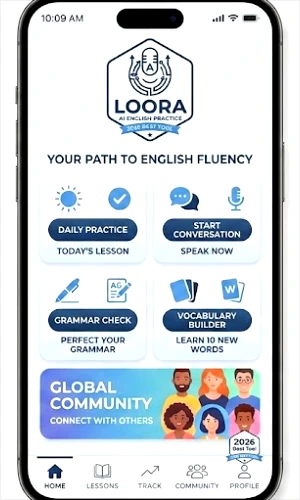
This review looks at Loora AI English language practice from every angle that matters to a real learner: what it actually does, how the app works day to day, what it costs, and where it falls short. The goal is simple — help you decide, with accurate information, whether Loora deserves a place in your English-learning routine.
Loora is built specifically for spoken English. It is not a general-purpose language app and it does not teach multiple languages. If your priority is speaking confidence, natural pronunciation, and low-pressure conversation practice, it’s worth understanding how the app works before you commit to a subscription.
Table of Contents
What Is Loora AI?
Loora AI is a mobile and web app built around one core idea: you learn to speak English by speaking English, out loud, with immediate feedback. Instead of static grammar drills or vocabulary flashcards, Loora puts you into a live voice conversation with an AI tutor that listens, responds naturally, and corrects you as you go.
The app is built by Loora A.I LTD and is focused entirely on English — there is no option to switch to another target language. Rather than positioning itself as a full English course, Loora frames itself as a conversation partner: something you can talk to at 6 a.m. before work or at midnight when nobody else is awake.
Core capabilities include:
- AI-powered, voice-based English conversations on every day and professional topics
- Real-time pronunciation feedback, broken down to specific sounds and words
- Grammar corrections during and after each conversation
- Vocabulary exposure through natural, topic-based dialogue
- Role-play scenarios such as interviews, meetings, and travel situations
- Personalized sessions based on your level and stated goals
It’s worth being clear about what Loora is not. It is not a certified exam-prep platform, and it is not a substitute for a qualified human English teacher who can explain nuance, culture, and context in ways an AI still cannot. Think of it as a practice partner that is always available, not a replacement for structured instruction.
How Does Loora AI Work?
The day-to-day experience is straightforward. Here’s what using Loora typically looks like:
- Open the Loora app on iOS, Android, or the web and create an account.
- Choose a learning focus, such as general conversation, professional English, or a specific scenario.
- Start speaking with the AI tutor using your device’s microphone.
- Receive real-time feedback on pronunciation, grammar, and word choice as the conversation unfolds.
- Review a session summary highlighting your mistakes and suggested corrections.
- Repeat difficult words or sentences until they feel natural.
- Track your progress over time through the app’s session history.
Because there’s no other person on the other end of the call, many learners find it easier to relax and speak freely. Mispronouncing a word or freezing mid-sentence in front of an AI feels far less stressful than doing the same thing in front of a colleague, teacher, or stranger. That judgment-free environment is arguably Loora’s biggest strength for nervous or beginner speakers.
Key Features of Loora AI
Here’s a closer look at what you actually get inside the app.
AI English Conversation Practice
The centerpiece of Loora is unscripted, real-time conversation. You pick a topic or scenario, and the AI adapts its responses to keep the dialogue moving naturally, similar to talking with a patient, always-available conversation partner.
Pronunciation Feedback
Loora’s speech recognition analyzes how you pronounce individual sounds and words; then flags the specific phonemes you’re struggling with. For non-native speakers, this kind of granular feedback is often more useful than a generic accuracy score.
Grammar Corrections
As you speak, the app tracks grammar mistakes — verb tense, word order, prepositions — and surfaces them after the session so you can review recurring error patterns instead of trying to self-correct mid-conversation.
Vocabulary Development
Because conversations span different topics, from ordering coffee to negotiating a business deal, you naturally encounter and reuse vocabulary in context rather than memorizing isolated word lists.
Role-Play Scenarios
Loora includes structured scenarios for situations learners actually face, such as:
- Job interviews
- Business meetings and presentations
- Travel and everyday situations
- Casual social conversations
- Customer and workplace communication
Personalized Feedback
Sessions adapt loosely to your stated level and goals, so a beginner working on basic confidence gets a different pace and vocabulary load than a professional preparing for an interview.
Is Loora AI Free?
This is one of the most searched questions about the app, and it deserves a direct answer: Loora AI is not a completely free English-learning app. You can download it at no cost, and most reports describe a short free trial period — commonly around seven days — that unlocks paid features temporarily, or a limited daily free lesson (often just a few minutes long) once the trial ends.
Multiple user reviews on the app stores describe the free experience as quite restrictive — sometimes a single short session per day — with a prompt to subscribe for anything beyond that. If your goal is serious, regular practice, you should plan on eventually paying for a subscription rather than expecting indefinite free access.
Because free-tier limits, trial lengths, and promotional offers change over time, always confirm the current terms directly on Loora’s official app store listing or website before making a decision.
Loora AI Pricing
Loora prices its subscription by billing cycle rather than by feature tier — according to Loora’s own support pages, all plans unlock the same features, and the only difference is how often you’re billed. Third-party reviews report a range of prices, which suggests pricing may vary by region, promotion, and platform (iOS vs. Android vs. web). Reported figures generally fall into these bands:
| Billing Cycle | Commonly Reported Price Range | Notes |
| Monthly | Roughly $9.99–$29.99 / month | Highest per-month cost; maximum flexibility |
| 3-Month | Roughly $14.99–$15/month equivalent | Mid-tier commitment |
| Annual | Roughly $79.99–$119.99 / year | Lowest effective monthly cost |
| Loora for Business | Custom quote | Team dashboards, seat management, dedicated support |
Prices and subscription conditions may change and can vary by region or platform. Check the official Loora website or your device’s app store listing for the current, accurate pricing before subscribing.
A free trial is commonly reported, often around seven days, after which the subscription renews automatically unless cancelled in advance. On iOS, cancellations are typically managed through Apple ID subscription settings rather than inside the app itself. Always cancel with enough buffer time — at least 24 hours before renewal — to avoid an unwanted charge.
How to Use Loora for English Speaking Practice
Step 1: Install or access Loora
Download the app from the official Apple App Store or Google Play listing, or use the web version if you’d rather practice from a laptop.
Step 2: Set your learning goal
Choose a focus area such as general English, speaking confidence, pronunciation, professional English, or interview preparation. This helps the app pick relevant topics and scenarios.
Step 3: Start a conversation
Speak naturally instead of mentally rehearsing a perfect sentence first. Loora is designed for spontaneous conversation, and hesitating to sound perfect defeats the purpose of the practice.
Step 4: Review corrections
After each session, go through the feedback on grammar, pronunciation, vocabulary, and sentence structure rather than skipping straight to the next conversation.
Step 5: Repeat difficult sentences
Say corrected sentences out loud two or three times. Repetition is what turns a correction into a habit.
Step 6: Practice consistently
Short, daily sessions of 10–15 minutes tend to build fluency faster than occasional long sessions once a week.
Loora for Beginners
Beginners can use Loora, but with realistic expectations. The app is strongest for building speaking confidence, practicing common phrases, and getting comfortable with pronunciation in a low-pressure setting. It’s less suited as a beginner’s only resource for foundational grammar and core vocabulary.
A sensible approach is to pair Loora’s conversation practice with a structured grammar or vocabulary resource, and use the app specifically for the speaking-and-listening half of the equation — the part that’s hardest to practice alone.
Loora for Intermediate and Advanced English Learners
Intermediate and advanced learners tend to get more direct value from Loora, since they already have the vocabulary and grammar base needed to hold a real conversation. For this group, the app is useful for:
- Improving fluency and reducing hesitation
- Practicing professional and industry-specific vocabulary
- Refining natural sentence construction
- Rehearsing interviews and presentations
- Building confidence in business and workplace communication
Can Loora Help with IELTS Speaking?
Loora is not an official IELTS preparation platform, and no verified information confirms IELTS-specific content or scoring. That said, the AI conversation format can still support IELTS speaking preparation informally — you can use it to rehearse Part 1 personal questions, practice extended answers similar to Part 2, and build fluency for Part 3 discussion-style questions.
If IELTS is your goal, treat Loora as supplementary speaking practice, not a substitute for official IELTS materials, sample tests, and feedback from a qualified instructor familiar with the exam’s scoring criteria.
Loora for Professional English
Professional communication is one of the areas Loora leans into most, with scenario-based practice for situations like:
- Job interviews
- Everyday office conversations
- Presentations and meetings
- Networking conversations
- Customer-facing communication
- International, cross-cultural workplace communication
For non-native professionals who need to sound confident on video calls or in interviews, this kind of low-stakes rehearsal space can meaningfully reduce anxiety before the real conversation happens.
Advantages of Loora AI
- Convenient, on-demand speaking practice — no scheduling needed
- Real-time AI conversation instead of static exercises
- Immediate feedback on pronunciation and grammar
- Private, judgment-free environment to make mistakes
- Useful role-play scenarios for work and travel
- Detailed pronunciation breakdown by sound
- Flexible practice schedule — five minutes or fifty
- Genuinely helpful for learners without an English-speaking partner
Disadvantages and Limitations of Loora
- Free access is limited; meaningful practice generally requires payment
- Subscription pricing is on the higher side compared with some competitors
- AI feedback, while useful, isn’t always as precise or nuanced as human correction
- Cannot fully replace real human conversation and cultural context
- Requires a stable internet connection and a decent microphone
- English-only — no support for other target languages
- Some users report daily lesson caps even on certain paid tiers
- Better suited to speaking practice than to a complete, structured course
Loora vs ChatGPT for English Practice
ChatGPT voice mode can also hold spoken English conversations, so it’s a natural comparison point. The key difference is purpose-built structure: Loora is designed end-to-end for English learning, with pronunciation scoring and progress tracking baked in, while ChatGPT is a general-purpose assistant that happens to be useful for conversation practice.
| Feature | Loora | ChatGPT (Voice Mode) |
| AI conversation | Yes | Yes |
| Speaking practice | Purpose-built for it | Possible, but not the primary design goal |
| Pronunciation feedback | Detailed, phoneme-level | Limited or inconsistent |
| Grammar feedback | Structured, session-based | Available if you ask for it |
| Role-play scenarios | Built-in library | Possible with manual prompting |
| Professional English focus | Dedicated modules | General-purpose only |
| Progress tracking | Built into the app | Not built in |
| Free access | Very limited | Free tier available, usage limits apply |
| Dedicated language-learning UI | Yes | No |
If you want a dedicated, structured English-speaking coach with tracking and scenario libraries, Loora is the more purpose-fit tool. If you’re comfortable prompting your own practice sessions and want more flexibility at a lower cost, ChatGPT voice mode is a reasonable substitute.
Loora vs ELSA Speak
ELSA Speak is one of Loora’s closest competitors, with a stronger historical focus on accent and pronunciation scoring, while Loora leans more heavily into open-ended conversation and professional role-play.
Choose Loora if: you want free-flowing conversation practice, professional and interview scenarios, and a natural dialogue format over drilled pronunciation exercises.
Choose ELSA if: your main priority is accent reduction and granular pronunciation scoring, and you prefer shorter, structured drills over open conversation.
Neither app is a universal winner — the better choice depends on whether your bottleneck is confidence and fluency (Loora) or specific pronunciation accuracy (ELSA).
Best Alternatives to Loora AI
ChatGPT Voice
Best for flexible, low-cost conversation practice on any topic; main limitation is the lack of structured language-learning tracking.
ELSA Speak
Best for pronunciation and accent training; main limitation is less emphasis on open conversation.
Speak
Best for structured, curriculum-style speaking lessons; main limitation is a more guided, less freeform experience.
Praktika
Best for AI avatar-based conversation practice; availability of free features should be checked directly, as terms change.
Gliglish
Best for casual conversational practice; a newer entrant with a smaller feature set than more established apps.
Gemini Live
Best for free-form spoken practice using Google’s assistant; not purpose-built for language learning specifically.
Talkpal
Best for multi-language conversation practice if you eventually want to learn more than English; main limitation is less depth on English-specific professional scenarios.
None of these tools should be assumed to be completely free — always verify current pricing and free-tier limits directly on each provider’s official site before choosing one.
Best Daily English Practice Routine With Loora
Consistency matters more than session length. A simple 30-minute daily structure:
- 5 minutes: Vocabulary warm-up — review words from your last session
- 10 minutes: AI conversation on a chosen topic or scenario
- 5 minutes: Review corrections from the session summary
- 5 minutes: Repeat the sentences you got wrong, out loud
- 5 minutes: Free, unscripted speaking on any topic you choose
Even 10–15 minutes a day, done consistently, tends to produce better speaking gains than a single two-hour session once a week. Speaking is a physical skill as much as a mental one, and it responds to repetition.
Tips to Get Better Results From Loora
- Speak every day, even briefly
- Avoid mentally translating every sentence from your native language
- Start conversations with familiar, comfortable topics
- Explicitly ask the AI to correct your mistakes
- Repeat corrected sentences out loud, more than once
- Keep a simple vocabulary notebook for new words
- Track recurring grammar mistakes across sessions
- Practice professional and interview scenarios, not just casual chat
- Gradually increase the difficulty of your conversation topics
- Combine AI practice with real conversations with humans when possible
Is Loora Worth It?
There’s no single right answer — it depends on what you need.
Loora may be worth considering if:
- You want regular, low-pressure speaking practice
- You don’t currently have an English-speaking partner
- You value immediate, structured AI feedback
- You prefer practicing privately rather than in a group
- You specifically need professional English practice
Loora may not be ideal if:
- You expect completely free, unlimited practice
- You need a human teacher for nuanced, cultural feedback
- You learn best in a classroom or group setting
- You need a full course covering reading, writing, and grammar in depth, not just speaking
What is Loora AI?
Loora AI is a voice-based English-learning app that lets users practice spoken English through real-time conversations with an AI tutor, with feedback on pronunciation and grammar.
Is Loora AI free?
Loora offers limited free access, typically a short trial and/or a restricted daily free lesson. Full, unlimited use generally requires a paid subscription — check the official app for current terms.
Does Loora have a free trial?
A free trial is commonly offered, often around seven days, though exact terms can vary and should be confirmed on the official app store listing.
Is Loora good for English speaking?
Yes, for conversational speaking practice specifically. It is well-suited to building fluency and confidence through repeated, low-pressure conversation.
Can Loora correct pronunciation?
Yes. The app analyzes speech and identifies specific sounds or words that need improvement, offering targeted feedback rather than a single overall score.
Can Loora improve English grammar?
Yes, to an extent. Loora flags grammar mistakes during conversations, though it works best alongside dedicated grammar study rather than as your only grammar resource.
Is Loora useful for IELTS speaking?
It can support informal IELTS speaking preparation, but it is not an official IELTS platform. Pair it with official IELTS materials and expert feedback for exam-specific preparation.
Is Loora suitable for beginners?
Beginners can use it for confidence-building and basic conversation, but should combine it with a structured grammar and vocabulary resource for a complete foundation.
Is Loora good for professional English?
Yes — professional scenarios like interviews, meetings, and presentations are one of the app’s strongest use cases.
Is Loora better than ChatGPT for English practice?
It depends on your needs. Loora offers a more structured, purpose-built experience with tracking and scenario libraries; ChatGPT’s voice mode offers more flexibility at a lower cost.
Can I use Loora every day?
Yes, and daily short sessions are generally more effective for building fluency than infrequent long sessions.
Does Loora replace an English teacher?
No. Loora is best used as a supplement to, not a replacement for, instruction from a qualified human teacher, especially for nuanced or advanced feedback.
Is Loora worth paying for?
For learners who want consistent, judgment-free speaking practice and don’t have another way to get regular conversation, the subscription can be a reasonable investment. Those wanting a free, complete English course may prefer other options.
.
Final Verdict
Loora AI does one thing well: it gives you a private, always-available partner to practice spoken English with, complete with real-time pronunciation and grammar feedback. For learners who struggle to find speaking opportunities — professionals prepping for interviews, students building confidence, or anyone without a regular conversation partner — that’s genuinely useful.
Where Loora falls short is breadth. It isn’t a complete English course, its free tier is limited, and its pricing sits at the higher end compared with some competitors. If you’re specifically looking for structured speaking practice and are willing to pay for it, Loora AI English language practice is a solid option to test through its free trial. If you need comprehensive grammar, reading, and writing instruction, or you want something completely free long-term, it’s worth comparing alternatives before subscribing.
Whichever tool you choose, the underlying principle stays the same: consistent, daily speaking practice — even just ten minutes a day — is what actually moves the needle on fluency.