
Best Free English Learning Apps: Download 4 Apps to Improve Your English
now
29MB
V1.1
Android 5+
10M+
Description
Learning English used to mean textbooks, classroom drills, and expensive courses. Today, a smartphone is often enough. Free English learning apps let you practice vocabulary, grammar, pronunciation, listening, and even speaking in the small pockets of time you already have — waiting for a bus, during a lunch break, or before bed.
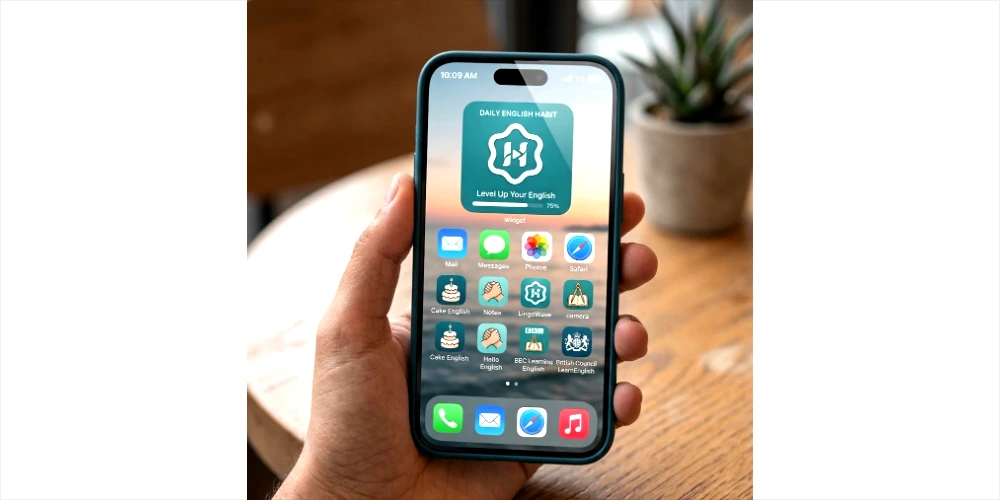
Different apps are good at different things. Some focus on short videos and everyday phrases. Some are built around structured grammar lessons. Others lean on authentic news content or classic language-teaching resources. Knowing what each app actually does well makes it much easier to pick the right one instead of downloading five apps and using none of them consistently.
In this guide, we’ll look closely at four popular free English learning apps: Cake English, Hello English, BBC Learning English, and British Council LearnEnglish. For each one, we’ll cover what it does well, who it suits, and where the free version stops and any paid options begin.
Table of Contents
What Are Free English Learning Apps?
Free English learning apps are mobile or web apps that let you practice English without paying anything to get started. Depending on the app, you might work on:
- Vocabulary — learning and reviewing new words
- Grammar — understanding tenses, sentence structure, articles, and common rules
- Pronunciation — practicing how words and sounds are actually spoken
- Listening — training your ear with audio or video content
- Speaking — practicing conversation, sometimes with AI feedback, sometimes with real people
- Reading — building comprehension through short texts or articles
- Everyday conversation — practical phrases for daily situations
It’s worth being upfront about one thing: “free” rarely means every single feature is free forever. Many of these apps are freemium — the core lessons or a solid chunk of content is free to use, while extras like offline downloads, live classes, ad-free browsing, or advanced courses sit behind an optional subscription. That’s not a bad thing; it just means it pays to know what you’re actually getting before you commit to an app as your main study tool.
1. Cake English
Cake (officially “Cake – Learn English & Korean”) takes a video-based approach to learning. Instead of static text lessons, it teaches everyday English through short clips — interviews, vlogs, and real-world scenes — with subtitles you can tap to see word-by-word translations.
What it’s good for:
- Listening and real-world English. Because the content comes from actual spoken clips rather than scripted textbook dialogue, learners get exposed to natural pacing, slang, and everyday expressions.
- Pronunciation feedback. Cake includes an AI pronunciation coach — you record yourself saying a phrase, and the app gives feedback on how close your pronunciation is to a native speaker’s.
- Bite-sized daily lessons. New expression clips are added regularly, which suits people who want a quick five- or ten-minute session rather than a long structured course.
- Beginner-friendliness. The short clips and repeat-after-me format make it approachable even if your English is still basic, though more advanced learners can also use it for idioms and natural phrasing.
Free vs. premium: Cake is free to download and use, with a large amount of lesson content available at no cost. A subscription tier, Cake Plus, removes ads, gives unlimited “hearts” (the app’s usage-limiting mechanic), and unlocks some exclusive content and unlimited word/sentence saving. In other words, you can learn a lot for free, but heavy daily users may eventually bump into limits that the paid tier removes.
Available on: Android and iOS.
Who should use it: Learners who want to build listening comprehension and pick up natural, spoken English rather than only textbook grammar — especially those who enjoy learning through video.
2. Hello English
Hello English, developed by CultureAlley, is built around structured lessons that combine grammar, vocabulary, and speaking practice, with translation support available in a large number of languages spoken across South Asia, Southeast Asia, and beyond.
What it’s good for:
- Grammar instruction. The app organizes grammar topics into clear lessons rather than leaving learners to pick it up by exposure alone — useful if you specifically struggle with tenses, articles, or sentence structure.
- Vocabulary building. A large in-app dictionary lets you look up words along with pronunciation audio, and vocabulary is reinforced through games rather than plain flashcards.
- Speaking practice. Hello English includes conversation practice features where you speak into the app and get feedback, aimed at building confidence with spoken English rather than just recognition skills.
- Offline lessons. A meaningful chunk of the core lesson content is designed to work without an internet connection, which matters for learners with limited or expensive mobile data.
- Beginner-friendly structure. Lessons are organized progressively, so complete beginners have a clear path rather than an overwhelming list of unconnected topics.
Free vs. premium: The core interactive lessons, grammar exercises, and vocabulary games are free to use. Hello English also offers a paid Gold/Pro tier with additional benefits such as live classes with English tutors and an ad-free experience. As with most freemium apps, casual learners can get real value from the free tier, while learners who want live instruction or a completely ad-free experience may look at the paid option.
Available on: Android, with availability sometimes varying by app store listing — it’s worth checking your regional Play Store or App Store directly, since listings for this app have changed over time.
Who should use it: Complete beginners who want a structured, grammar-first path, particularly those who’d benefit from lesson translations into their native language.
3. BBC Learning English
BBC Learning English is a long-running, well-known resource from the BBC that offers short lessons built around real news stories, everyday topics, and current events. It’s less “gamified” than apps like Cake or Hello English, and more focused on genuinely educational content.
What it’s good for:
- Authentic listening practice. Lessons are often built around real spoken English — news clips, interviews, and discussions — rather than scripted classroom dialogue, which helps learners get used to natural speaking speed and rhythm.
- Vocabulary in context. New words and phrases are usually introduced through actual stories or topics, which tends to help them stick better than isolated word lists.
- Grammar and pronunciation. Shorter, focused segments explain specific grammar points or pronunciation features (like word stress or connected speech) without turning into a full course.
- Multiple levels. Content is generally organized so beginner, intermediate, and more advanced learners can each find something suited to their level.
- Short, digestible lessons. Many lessons run just a few minutes, which fits well into a short daily habit rather than requiring long study sessions.
Free vs. premium: BBC Learning English’s core content — articles, audio, video lessons, and related exercises — is free to access. As a publicly available BBC resource, it doesn’t rely on a subscription model in the way some commercial apps do, though app store listings and companion apps built around BBC content can vary, so it’s worth checking the specific app or site you’re using.
Available on: Web, and through various apps and companion products (some official, some built by third parties around BBC content) on Android and iOS — it’s a good idea to confirm you’re using an official or clearly BBC-sourced app before relying on it.
Who should use it: Intermediate learners who want to move beyond basic phrases into more natural, real-world English, and anyone who prefers learning through genuinely informative content rather than gamified drills.
4. British Council LearnEnglish
The British Council is one of the most established names in English-language education, and its LearnEnglish apps reflect that — offering a wider spread of tools than a single all-in-one app, including dedicated apps for grammar, pronunciation, and general skills.
What it’s good for:
- Grammar practice. LearnEnglish Grammar offers a large bank of interactive grammar questions ranging from beginner to advanced levels, which is useful for learners who want to drill specific rules.
- Pronunciation. A dedicated pronunciation tool provides an interactive sound chart covering English vowels, consonants, and diphthongs, with audio playback so learners can hear and compare individual sounds.
- Listening and reading. Podcasts, videos, and articles are available for practicing comprehension at a pace suited to different levels.
- Structured, expert-designed content. Because the British Council has decades of experience in English language teaching, the material tends to be well-organized around genuine pedagogical goals rather than pure engagement metrics.
- Range for different learners. There are separate apps and sections aimed at adults, students, and younger learners, so the right tool depends a bit on who’s using it.
Free vs. premium: Much of the LearnEnglish content — grammar exercises, pronunciation tools, podcasts, and videos — is free. The British Council also offers paid options, such as structured online courses, live classes, and one-to-one tutoring, which sit alongside (not instead of) the free self-study resources.
Available on: iOS and Android, through a family of separate apps rather than one single app, so it’s worth checking which specific LearnEnglish app matches what you want to practice (grammar, pronunciation, or general skills).
Who should use it: Learners who want expert-designed material and are comfortable using a couple of different specialized apps rather than one do-everything app — particularly useful for focused grammar or pronunciation practice.
Comparison of the Best Free English Learning Apps
| App | Best For | Main Skills | Beginner Friendly | Free Resources |
|---|---|---|---|---|
| Cake English | Video-based, natural spoken English | Listening, pronunciation, vocabulary | Yes | Large lesson library free; Cake Plus removes ads and usage limits |
| Hello English | Structured grammar with native-language support | Grammar, vocabulary, speaking | Yes | Core lessons and games free; Gold/Pro adds live classes |
| BBC Learning English | Authentic, news-based content | Listening, vocabulary, grammar | Better for intermediate+ | Core content free to access |
| British Council LearnEnglish | Expert-designed grammar and pronunciation tools | Grammar, pronunciation, listening, reading | Yes | Core apps and tools free; paid courses available separately |
Which Free English Learning App Is Best for You?
There isn’t one single “best” app — it depends on what you’re trying to improve and how you like to learn.
Best for video-based learning: Cake English. If you learn well by watching and imitating real spoken English, its short clips and pronunciation coach are a good fit.
Best for structured beginner practice: Hello English. If you want grammar explained clearly, with support in your own language, this is a solid starting point.
Best for authentic, real-world content: BBC Learning English. If you already have some English and want to sound more natural by learning from genuine spoken and written content, this works well.
Best for focused grammar or pronunciation drills: British Council LearnEnglish. If you know exactly which skill you’re weak in — say, articles, or specific vowel sounds — its dedicated tools let you target that directly.
Many learners end up using more than one app for different purposes — for example, Hello English or Cake for daily practice, and British Council LearnEnglish or BBC Learning English for deeper grammar or listening work.
How to Choose a Free English Learning App
Before settling on an app, it helps to think through a short checklist:
- Your current level. Complete beginners generally need more structure and native-language support than intermediate or advanced learners.
- Speaking practice. If your main goal is confidence in conversation, prioritize apps with speaking exercises or AI feedback, not just reading and vocabulary.
- Pronunciation support. Look for apps with audio playback, recording features, or dedicated pronunciation tools if this is a weak spot.
- Vocabulary approach. Some apps use flashcards and games; others build vocabulary through context. Pick whichever actually helps you remember words.
- Grammar exercises. If you need explicit grammar rules rather than picking things up naturally, look for apps that explain rules clearly, not just drill you.
- Listening materials. Check whether the audio or video content matches your interests and level — dry, mismatched content is easy to abandon.
- Offline access. If you have limited data or an unreliable connection, offline lesson support matters.
- Advertisements. Free apps often include ads. Decide how much that will bother you day-to-day.
- Premium limitations. Understand what’s actually locked behind a paywall before you rely on an app as your only resource.
- Consistency of updates. Apps that add fresh content regularly tend to stay useful longer than ones with a fixed, unchanging lesson bank.
Tips for Learning English With Mobile Apps
An app is only as useful as how you use it. A few practical habits make a real difference:
- Practice for 15–30 minutes every day rather than a couple of hours once a week — consistency beats cramming.
- Learn new vocabulary in context, not as isolated word lists, so you remember how a word is actually used.
- Repeat sentences aloud, even when you’re alone — this builds muscle memory for pronunciation.
- Practice pronunciation actively, using recording or feedback tools rather than only listening passively.
- Listen to English every day, even for a few minutes, through podcasts, videos, or app audio content.
- Keep a vocabulary notebook (digital or paper) for words you keep forgetting.
- Review previously learned words and lessons regularly instead of only moving forward.
- Practice speaking, not just reading — comprehension and production are different skills, and only one of them gets you talking.
- Combine apps with real conversations when possible, since apps can’t fully replace the unpredictability of talking with an actual person.
- Track your progress weekly so you can see what’s working and adjust your routine if it isn’t.
Are Free English Learning Apps Really Free?
Mostly yes, but with some nuance worth understanding:
- Completely free resources exist — for example, BBC Learning English’s core lessons are accessible without payment.
- Freemium apps, like Cake and Hello English, offer real, usable content for free while reserving certain extras (ad removal, live classes, unlimited usage) for paying subscribers.
- Free lessons with advertisements are common — the app itself costs nothing, but ads support it, which some learners find mildly annoying.
- Optional premium subscriptions typically unlock convenience features (offline downloads, no ads) or deeper content (live tutoring, advanced courses) rather than being required to learn at all.
- Free educational websites and resources, like the British Council’s LearnEnglish site and app family, often exist specifically to provide free public access to quality material, separate from any paid courses they also sell.
The short version: you can genuinely learn English for free using any of the four apps above. Paying, where it’s an option, tends to buy convenience or extra depth rather than being a requirement to make progress.
What is the best free English learning app?
It depends on your goal. Cake English suits learners who want video-based, natural spoken English. Hello English suits beginners who want structured grammar with native-language support. BBC Learning English suits learners who want authentic, real-world content. British Council LearnEnglish suits learners who want expert-designed grammar and pronunciation tools.
Which app is best for beginners learning English?
Hello English is particularly beginner-friendly because of its structured lessons and translation support in many languages. Cake is also approachable for beginners thanks to its short, repeat-after-me video format.
Can I learn English for free using an app?
Yes. All four apps covered here offer a genuinely useful amount of free content — enough to build vocabulary, grammar, listening, and speaking skills without paying anything.
Which free app is best for English speaking practice?
Cake English (with its AI pronunciation coach) and Hello English (with its speaking practice features) are both built with spoken practice in mind. For deeper grammar-driven speaking confidence, pairing either with British Council’s pronunciation tools can help too.
Is Cake English free?
Yes, Cake is free to download with a large amount of free lesson content. An optional Cake Plus subscription removes ads and usage limits and adds some exclusive content.
Is Hello English free?
Yes, the core lessons, grammar exercises, and vocabulary games are free. An optional Gold/Pro tier adds features like live classes and an ad-free experience.
Is BBC Learning English free?
Yes, BBC Learning English’s core content — articles, audio, and video lessons — is free to access as a public educational resource.
Is British Council LearnEnglish free?
Yes, the core LearnEnglish apps and tools (grammar practice, pronunciation charts, podcasts, and videos) are free. The British Council also sells separate paid courses and tutoring, which are optional add-ons rather than requirements.
Conclusion
The four apps in this guide show just how much you can genuinely accomplish with free English learning apps — no expensive course or classroom required, just a phone and a bit of daily discipline. Cake English, Hello English, BBC Learning English, and British Council LearnEnglish each take a noticeably different approach, which is exactly why it’s worth understanding them individually rather than treating “an English app” as one interchangeable category.
Cake leans on short, subtitled videos and an AI pronunciation coach, so it suits learners who want to absorb natural, spoken English and get direct feedback on how they sound. Hello English takes a more structured route, explaining grammar step by step and offering native-language support, which makes it a strong starting point for complete beginners who need things laid out clearly. BBC Learning English draws on real news stories and everyday topics, giving intermediate learners exposure to authentic English rather than simplified textbook dialogue. British Council LearnEnglish rounds things out with expert-built tools for grammar and pronunciation specifically, ideal for learners who already know which skill they need to target.
What ties all four together is that each one offers a genuinely useful, no-cost way to practice — proof that free English learning apps don’t have to mean watered-down content or a constant push toward a paywall. The free tiers here cover real ground: full lesson libraries, grammar exercises, pronunciation tools, and authentic listening material, with paid options sitting alongside as optional extras rather than gatekeeping the basics.
That said, no app — free or paid — will teach you English on its own. The learners who make the fastest progress with free English learning apps are the ones who show up consistently, even if it’s only fifteen or twenty minutes a day, and who treat the app as one part of their routine rather than the whole plan. Pair your app practice with real conversations, reading, or listening whenever you can, and let the app handle the structure and repetition your memory needs.
So rather than downloading every app on this list and losing momentum after week one, pick the one or two free English learning apps that best match where you are right now and what you’re trying to improve — speaking confidence, grammar accuracy, vocabulary, or listening comprehension — and commit to using them regularly. Small, steady practice with the right free English learning apps will take you further than any amount of app-hopping ever could.