
ElevenLabs: The AI Voice Platform Behind the Web’s Most Natural-Sounding Speech
now
20.6MB
V1.1
500K+
Description
Introduction
If you’ve ever sat through a corporate training video narrated by a flat, robotic voice, or tried to localize content for five different markets and realized you’d need five different voice actors, you already know the problem. Text-to-speech has historically meant a trade-off: fast and cheap, or natural and expensive. Rarely both.
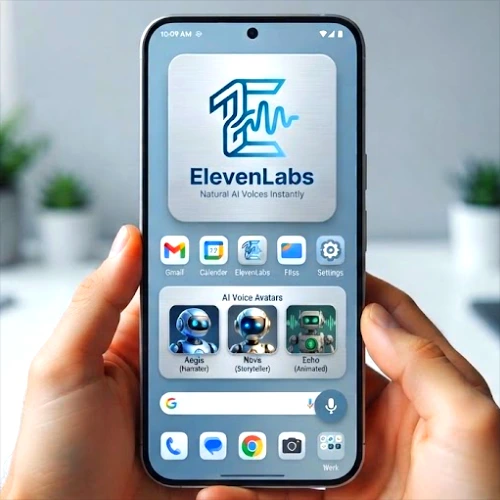
That’s the gap ElevenLabs was built to close. It’s an AI voice platform that generates natural, expressive speech in dozens of languages, fast enough to fit into a real production workflow and realistic enough that listeners often can’t tell it’s synthetic.
This article covers what it actually is, how it works, its core features, real-world use cases, pricing basics, the ethical considerations around voice cloning, and how it compares to other AI voice tools on the market.
Table of Contents
What Is ElevenLabs?
ElevenLabs is an AI-powered voice generation and text-to-speech platform. It uses deep learning models trained on speech data to produce audio with natural intonation, pacing, and emotional expression — a meaningful step up from the mechanical-sounding text-to-speech tools most people are used to.
Beyond straightforward text-to-speech, the platform supports voice cloning (creating a digital replica of a specific voice, with consent and verification required) and custom voice creation, alongside dozens of supported languages. It’s used across a wide range of contexts — by individual creators, businesses producing content at scale, and developers building voice into their own applications.
Key Features
Natural AI Voice Generation
The core of the platform is text-to-speech that aims for natural intonation, pacing, and emotional nuance rather than a flat, monotone read — the difference that usually gives synthetic speech away.
Multilingual Support
The platform generates voices across a wide range of languages and accents, which makes it practical to produce content for multiple markets without recording separate sessions with native speakers for each one. Exact language counts change as models are updated, so check the official site for the current figure.
Voice Cloning
Users can create a digital replica of a voice from a sample recording. Consent and verification are required before a voice can be cloned, and unauthorized impersonation is against its terms — this isn’t a feature for cloning someone else’s voice without their permission.
Voice Library
A marketplace of pre-made, ready-to-use AI voices covers a wide range of tones and use cases, so you don’t need to design a voice from scratch if an existing one fits your project.
Voice Design
For projects that need something more specific, Voice Design lets you create an entirely new synthetic voice by adjusting characteristics like age, gender, tone, and style.
Speech to Speech
This feature transforms an existing audio recording into a different voice while preserving the original delivery and emotional performance — useful when the performance itself is right but the voice needs to change.
Projects & Long-Form Audio
A dedicated workspace supports longer-form work like audiobooks and podcasts, with chapter organization built in so long-form narration doesn’t have to be managed as one unbroken block of text.
API Access
A developer-facing API lets teams integrate its voices directly into apps, games, voice agents, and other products, rather than generating audio manually through the web interface.
Dubbing Studio
The Dubbing tool can automatically translate and re-narrate video content into other languages while aiming to preserve the original speaker’s voice characteristics, with manual customization available for fine-tuning the result.
Benefits of Using It
- Lower cost and faster turnaround than booking and scheduling professional voice actors for every project
- Multilingual content without needing to find and coordinate native speakers for each language
- Consistent brand voice across videos, ads, and other content, rather than a different voice actor for each piece
- Improved accessibility by making it easier to produce high-quality audio versions of written content
- Faster content production for YouTube, social media, and e-learning, where turnaround time often matters as much as quality
- Room to experiment with different voices and styles without the cost of booking multiple recording sessions
How to Get Started (Step-by-Step)
- Create a free account on the official website.
- Choose a voice from the Voice Library, or create a custom voice if you need something specific.
- Enter or paste your text into the text-to-speech editor.
- Adjust settings such as stability, clarity, and style to fine-tune how the output sounds.
- Generate, preview, and download the audio in your preferred format.
- For longer projects, use the Projects workspace to manage chapters and export a full audiobook or long-form piece.
The platform runs entirely in the browser for basic use — there’s no software to install to get started.
Use Cases and Real-World Applications
- YouTube and video voiceovers
- Podcast production and editing
- Audiobook narration
- E-learning and training modules
- Video game character voices
- IVR and customer support voice systems
- Social media content — TikTok, Instagram Reels, and similar formats
- Accessibility and assistive technology
- Film and video dubbing into other languages
Pricing and Free Tier
There is a free tier with a limited monthly usage allowance, which is a reasonable way to test voice quality and the editor before committing to a paid plan. Paid plans unlock higher usage limits, commercial usage rights, and more advanced features such as voice cloning and the Projects workspace for long-form content.
Ethical Considerations and Responsible Use
Voice cloning technology raises real ethical questions, and it’s worth taking them seriously rather than treating them as a footnote. Cloning someone’s voice without their explicit consent — even a public figure’s — can cross into impersonation, and the potential for misuse in deepfakes or misinformation is a legitimate concern across the entire AI voice industry, not just this platform specifically.
Verification is required before a voice can be cloned, and unauthorized impersonation is prohibited under its terms of use. That said, no verification system is a perfect substitute for using the technology responsibly: get clear consent before cloning anyone’s voice, disclose when audio is AI-generated where that matters to your audience, and don’t use voice cloning to mislead people about who’s actually speaking.
ElevenLabs vs. Alternatives
| Platform | Voice Realism | Multilingual Support | Voice Cloning | API Access | Free Tier |
| ElevenLabs | Industry-leading realism and expressiveness | Broad language support, dozens of languages | Yes (consent + verification required) | Yes, developer-friendly | Yes, limited usage |
| Murf.ai | Solid, more geared toward studio-style narration | Multiple languages, narrower than ElevenLabs | Limited | Yes | Yes, limited |
| Play.ht | Good quality, competitive pricing focus | Wide language support | Yes | Yes | Yes, limited |
| Resemble AI | Strong voice cloning focus | Multiple languages | Yes, enterprise-oriented | Yes | Limited/trial-based |
| Google Cloud Text-to-Speech | Reliable but more traditional TTS character | Very broad, enterprise-grade language coverage | No native consumer cloning | Yes, cloud-infrastructure focused | Yes, usage-based free quota |
Where this platform tends to stand out is voice realism and the breadth of its multilingual generation — it’s frequently cited as a leader on those two specific dimensions, though exact quality comparisons are subjective and worth testing yourself with a free account before deciding. Google Cloud Text-to-Speech is a reasonable choice if you’re already deep in Google’s cloud infrastructure and want tight integration over cutting-edge voice realism.
Pros and Cons
| Pros | Cons |
| Industry-leading voice realism and expressiveness | Free tier has limited usage, which may not be enough for real projects |
| Broad multilingual support for global content | Voice cloning requires verification, which adds a step (by design, for safety) |
| Easy-to-use browser interface, no installation required | Potential for misuse if used irresponsibly, as with any voice-cloning technology |
| Powerful, developer-friendly API, plus Voice Design for custom needs | Premium plans can get costly for high-volume users |
| Useful for long-form content via the Projects workspace | Some voices can still sound slightly synthetic in very long, unbroken passages |
Is it free to use?
There is a free tier with limited monthly usage, which is enough to test voice quality and the platform’s editor. Higher usage, commercial rights, and advanced features require a paid plan — check the official pricing page for current details.
Can I use these voices for commercial projects?
Commercial use typically requires a paid plan rather than the free tier. Confirm the specific commercial licensing terms attached to your plan on the official pricing page before publishing monetized content.
How many languages are supported?
A wide range of languages is supported, and the exact count has grown as the underlying models have been updated. For the current, accurate language list, check the official website rather than relying on a number that may already be outdated.
Is voice cloning safe and legal?
Consent and verification are required before a voice can be cloned, and unauthorized impersonation violates the terms of use. That said, the legal landscape around voice cloning varies by jurisdiction and is still evolving, so use the feature responsibly and only with clear consent from the voice’s owner.
Can I integrate it with my own app?
Yes. A developer-friendly API is available for integrating its voices into apps, games, voice agents, and other products, rather than only generating audio manually through the web editor.
What audio formats are supported for download?
Common audio export formats are supported for downloaded output; the exact format and quality options available can depend on your plan, so check the platform directly for the current options.
Conclusion
This platform has become one of the go-to tools for natural-sounding AI voice generation, and the reason is straightforward: it solves a real production bottleneck. Instead of choosing between expensive professional voice talent and robotic-sounding text-to-speech, it offers a middle path that’s fast, multilingual, and genuinely expressive — provided it’s used responsibly, especially around voice cloning and consent. Whether you’re producing YouTube videos, localizing an e-learning course, building a voice-enabled app, or narrating an audiobook, it’s worth trying the free tier to hear the quality for yourself. Start creating natural AI voices with ElevenLabs today at elevenlabs.io.